


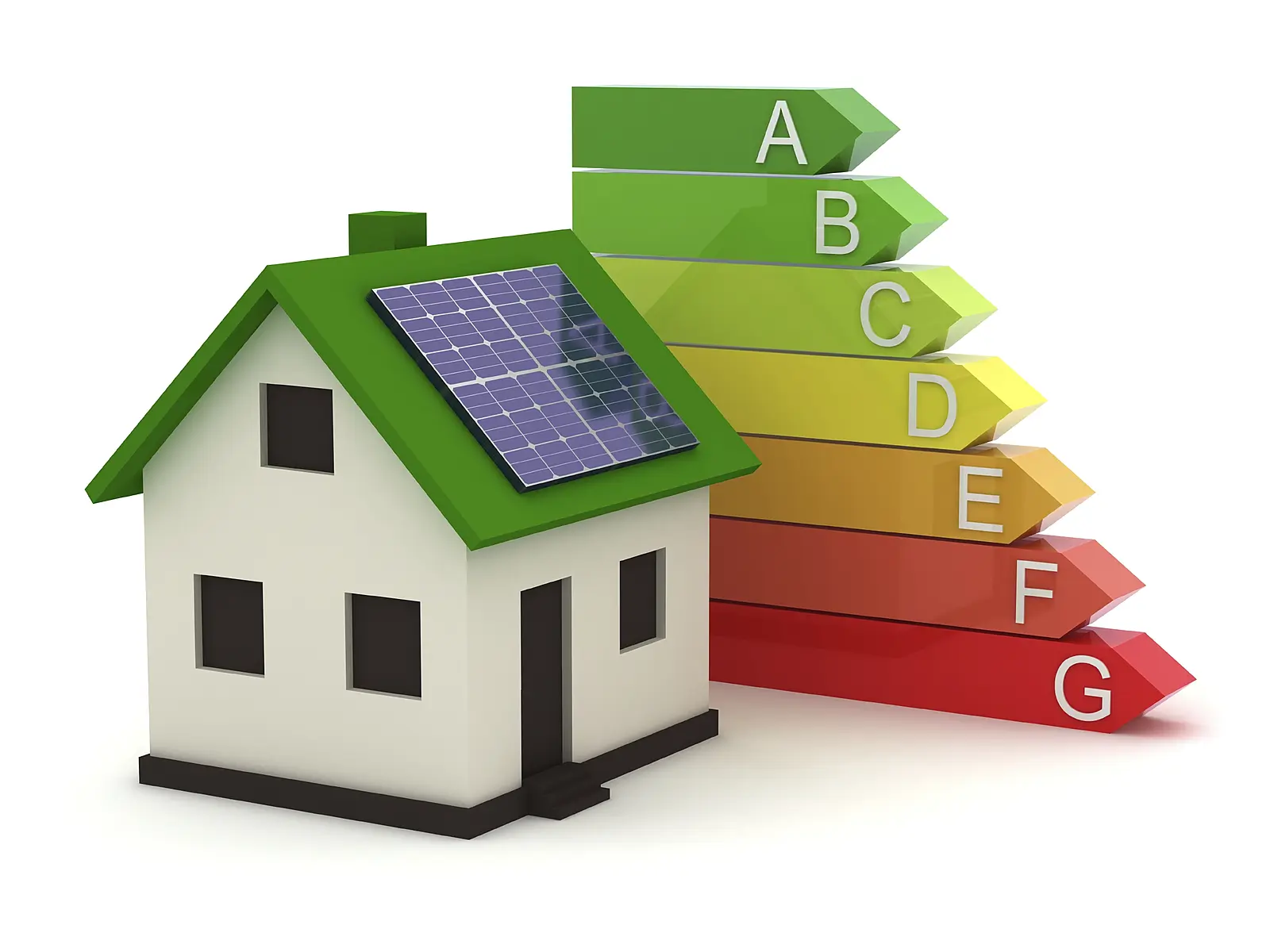
A total of 162,799 Building Energy Rating (BER) certificates were awarded to new and existing dwellings in 2025 – an increase of 6% compared to 2024 and the most of any year for the period 2009-2025.
That’s according to the CSO’s Domestic Building Energy Ratings report for Q4 2025.
The total number of audits published from January 2009 to December 2025 was 1.7 million, including dwellings with multiple assessments.
Of the 1.3 million unique dwellings to receive a BER since 2009, 18% received an A rating in their most recent assessment.
Of the BER rated households where the main space heating fuel can be identified, 26%, or over 343,000, had at least one source of renewable energy present when considering heat pumps, solar thermal systems, and solar photovoltaic panels. This was 23% higher than the 278,000 audits reported at the end of 2024.
Energy from solar electric panels or solar thermal collectors was present in 15% of rated dwellings by Q4 2025. This proportion was highest in detached houses (24%) and lowest in apartments (5%). By county, the highest proportion of dwellings with solar energy was 23% in Meath, 21% in Kildare and 21% in Dublin County.
A heat pump was present in 14% of rated dwellings where the main space heating fuel could be identified. This proportion was highest in newer builds, with heat pumps present in 85% of dwellings built from January 2020 to December 2025
Newer builds were more energy efficient than older stock. A ratings were awarded to 99% of audited dwellings built from 2020-2025, and to 94% of those built between 2015-2019. In comparison, 38% of dwellings built between 2010-2014 and 5% of the dwellings built from 2005-2009 received an A rating.
The most common main space heating fuel in audited dwellings was mains gas (35%), followed by heating oil (35%) and electricity (26%). For dwellings built since 2015, electricity was the most common space heating fuel. Dwellings constructed from 2020-2025 were 94% electrically heated.
Among those dwellings which have received more than one BER assessment, 210,112 saw an improvement of at least one full letter category over their initial energy rating. Of these, 50% went from a C rating or below in their first rating to an A or B in their most recent assessment.
The highest proportions of A rated dwellings were in Kildare (29%), Meath (28%) and Dublin County (28%), while the lowest were in Leitrim and Cork City (both 6%). The highest proportions of G rated dwellings were in counties Roscommon (11%) and Leitrim (11%).
In the Dublin postal districts, the highest proportions of A ratings were in Dublin 18 (44%), Dublin 13 (31%) and Dublin 20 (28%).
There were also 5,476 non-domestic Building Energy Ratings (BERs) published in 2025, 2% fewer than in 2024.
Retail was the most frequently reported non-domestic building type (37%) followed by offices (25%). F or G ratings were received by 18% of rated retail buildings and 22% of rated office buildings. Similarly, 17% of retail buildings were A or B rated, compared with 13% of offices.
Follow MyHome on WhatsApp for all the latest property news and advice.